
Laser cut acrylic has become a preferred fabrication method for businesses, designers, engineers, and manufacturers who need precision, durability, and visual appeal. Acrylic laser cutting allows for intricate designs, smooth polished edges, and consistent results that are difficult to achieve using traditional cutting techniques.
In this comprehensive guide, we explore everything you need to know about laser cut acrylic, including how acrylic laser cutting works, why it is widely considered the best way to cut acrylic, and how to choose the right acrylic laser cutter for your project. Whether you are creating signage, prototypes, or custom components, this guide will help you make informed decisions.
What Is Acrylic and Why It’s Ideal for Laser Cutting
Acrylic, also known as PMMA, is a transparent thermoplastic often used as a lightweight alternative to glass. Its combination of strength, clarity, and machinability makes it one of the most popular materials for laser processing.
Unlike glass, acrylic is impact-resistant and significantly lighter, making it easier to fabricate and install. It also reacts extremely well to laser energy, allowing clean cuts without physical contact. This is one of the main reasons laser cut acrylic is so widely used across industries.
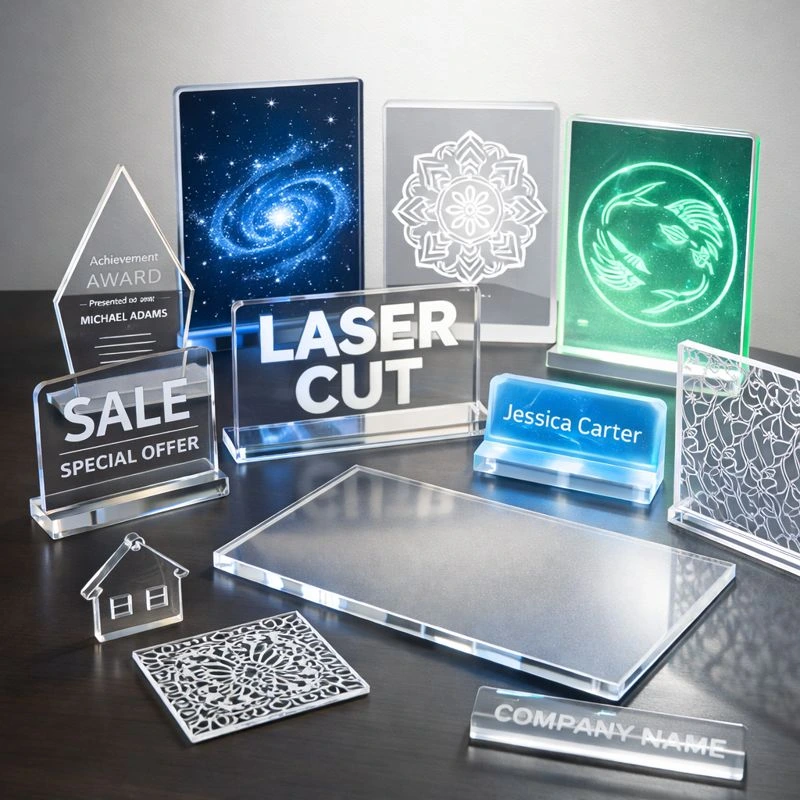
Acrylic is commonly chosen for:
- Signage and branding elements
- Retail displays and fixtures
- Decorative architectural panels
- Machine covers and enclosures
- Awards, plaques, and art pieces
Because acrylic laser cutting produces smooth, polished edges straight from the machine, little to no post-processing is required in most cases.
Cast vs Extruded Acrylic: Understanding the Difference
Choosing the correct type of acrylic is critical for achieving high-quality laser cut acrylic results. The two most common forms are cast acrylic and extruded acrylic, and while they may look similar, they behave differently during acrylic laser cutting.
Cast acrylic is produced by pouring liquid acrylic into molds and allowing it to cure slowly. This manufacturing process creates a more uniform internal structure, which results in cleaner cuts and better engraving quality. When laser cut, cast acrylic typically produces smooth, flame-polished edges with minimal melting.
Extruded acrylic, on the other hand, is manufactured by pushing molten acrylic through rollers. This method is faster and more cost-effective, but it creates internal stresses that can cause the material to melt more during cutting. As a result, edges may appear less polished, especially at slower cutting speeds.
In most applications, cast acrylic is considered the best way to cut acrylic using a laser, particularly when appearance and detail matter. Extruded acrylic can still be used successfully, but it requires careful adjustment of laser settings.
How Acrylic Laser Cutting Works
Acrylic laser cutting uses a focused laser beam to melt and vaporize material along a programmed path. CO₂ lasers are most commonly used because acrylic absorbs infrared laser energy extremely efficiently.
The process begins when the laser beam is focused onto the acrylic surface. As the beam moves, it generates intense heat that melts the material cleanly along the cut line. Because there is no physical contact, there is no tool pressure, which greatly reduces the risk of cracking or chipping.
One of the biggest advantages of using an acrylic laser cutter is edge quality. The controlled melting process leaves behind smooth, glossy edges that often resemble polished glass. This makes acrylic laser cutting ideal for visible parts where appearance is important.
Best Way to Cut Acrylic: Laser Cutting vs Other Methods
There are several ways to cut acrylic, but not all methods deliver the same level of quality or precision. While manual and mechanical methods still have their place, laser cutting is often the preferred choice for modern fabrication.
Laser cutting stands out because it offers:
- Exceptional precision for complex shapes
- Smooth, polished edges without sanding
- Fast turnaround for both prototypes and production
- Minimal material waste
CNC routing is sometimes used for thicker acrylic sheets or large industrial parts. However, routed edges typically require additional finishing and do not match the clarity of laser cut acrylic edges. Manual scoring and sawing methods are best reserved for straight cuts and low-detail projects, as they lack accuracy and consistency.
For most applications, especially those requiring clean aesthetics and tight tolerances, acrylic laser cutting remains the best way to cut acrylic.
Design and Fabrication Best Practices for Acrylic Laser Cutting
Achieving professional results with laser cut acrylic starts at the design stage. Even though laser cutting is highly precise, poor design choices can lead to cracking, poor fit, or unwanted melting.
When designing parts for acrylic laser cutting, it is important to account for kerf width, which is the small amount of material removed by the laser beam. Tight internal corners should be avoided, as they can create stress points that may crack over time. Adding small fillets or rounded corners improves durability and appearance.
Material preparation also plays a major role in cut quality. Acrylic sheets should remain flat and clean, and protective masking should stay in place during cutting to prevent smoke marks. Proper ventilation is essential, as acrylic fumes must be safely exhausted.
By following these best practices, you can ensure consistent, high-quality laser cut acrylic parts with minimal post-processing.
Advanced Applications of Laser Cut Acrylic
As fabrication technology continues to evolve, acrylic laser cutting is being used in increasingly advanced and creative ways. Its ability to combine strength, transparency, and precision makes it suitable for both functional and decorative applications.
Laser cut acrylic is commonly used in:
- Custom signage and illuminated logos
- Edge-lit LED panels and light diffusers
- Rapid prototyping for engineering projects
- Architectural and interior design elements
- Retail and exhibition displays
These applications benefit from the accuracy and repeatability of an acrylic laser cutter, especially when producing complex designs or high-volume orders.
Choosing the Right Acrylic Laser Cutter
Selecting the right acrylic laser cutter depends on your production needs, material thickness, and workspace requirements. Power is one of the most important factors, as higher wattage lasers can cut thicker acrylic more efficiently.
Other important considerations include:
- Cutting bed size to match your sheet dimensions
- Software compatibility for vector design files
- Proper exhaust and cooling systems
Small desktop laser cutters are suitable for hobbyists and light production, while industrial-grade acrylic laser cutters are ideal for businesses that require speed, consistency, and scalability.
Common Problems in Acrylic Laser Cutting and How to Avoid Them
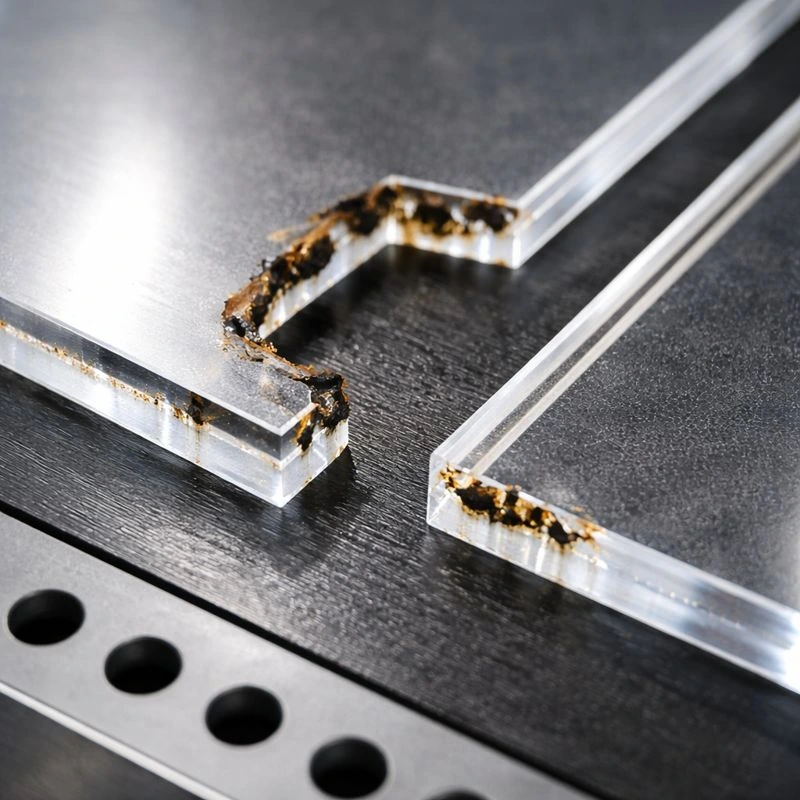
Even with the right equipment, acrylic laser cutting can present challenges if settings or materials are incorrect. Common issues include melted edges, burn marks, incomplete cuts, and cracking near tight corners.
Most of these problems can be avoided by using cast acrylic, ensuring proper focus, adjusting speed and power settings, and performing test cuts before full production runs. Proper airflow and masking also help maintain edge clarity and surface finish.
Understanding how acrylic reacts to laser energy is key to achieving reliable, repeatable results.
Frequently Asked Questions About Laser Cut Acrylic
Is laser cutting acrylic safe?
Yes, acrylic laser cutting is safe when proper ventilation and exhaust systems are used.
What thickness of acrylic can be laser cut?
Most acrylic laser cutters can cut material up to 20 mm thick, depending on laser power.
Does laser cutting melt acrylic?
Yes, controlled melting is what creates the smooth, polished edges seen in laser cut acrylic.
Is laser cutting the best way to cut acrylic?
For precision, appearance, and efficiency, laser cutting is widely considered the best way to cut acrylic.
Can acrylic be engraved with a laser cutter?
Yes, acrylic laser cutters can both engrave and cut with excellent detail.
Conclusion: Why Laser Cut Acrylic Is the Smart Choice
Laser cut acrylic offers an unmatched combination of precision, versatility, and visual quality. From signage and displays to functional components and prototypes, acrylic laser cutting delivers professional results with minimal finishing required.
By choosing the right material, using a high-quality acrylic laser cutter, and following proven design and fabrication practices, you can achieve consistent, high-quality outcomes for virtually any project. For businesses and creators alike, laser cut acrylic continues to be one of the most reliable and effective fabrication solutions available today.