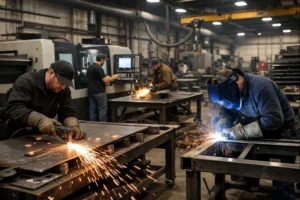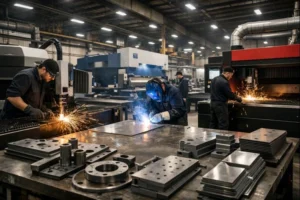
In today’s competitive manufacturing environment, businesses require fabrication partners who can deliver accuracy, consistency, and dependable turnaround times. Toledo Fab provides advanced metal fabrication services designed to support industries that demand precision and performance. With modern equipment, skilled technicians, and a quality focused workflow, ToledoFab Services help clients transform raw metal into reliable, production ready components.
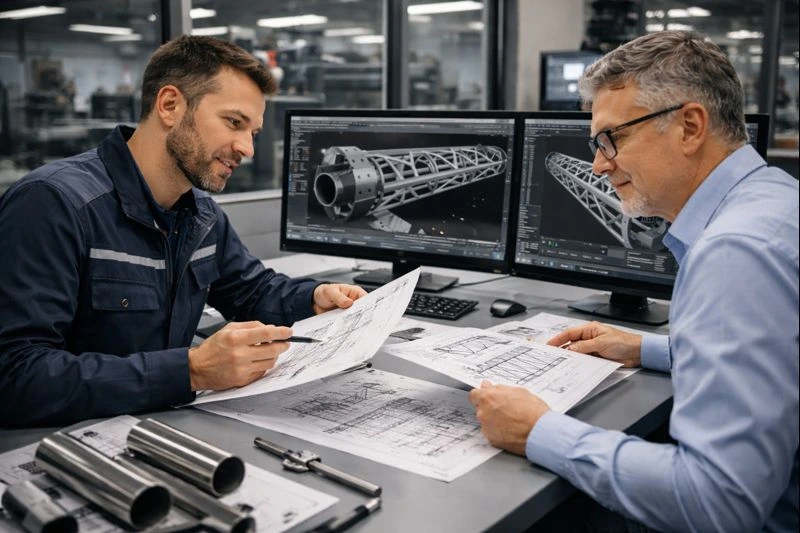
From detailed sheet metal forming to advanced laser cutting and secure fastening solutions, Toledo Fab offers end to end fabrication support under one roof. Our services include brake bending, laser tube cutting, flat laser cutting, and metal tapping, all delivered with strict quality control and a strong commitment to customer requirements.
Understanding the Toledo Fab Approach to Metal Fabrication
At Toledo Fab, every project begins with a clear understanding of client expectations. We believe successful fabrication is not only about machines but also about planning, communication, and execution.
Our service process includes:
Reviewing drawings and technical specifications
Assessing manufacturability and tolerances
Selecting the most suitable fabrication method
Producing components using advanced CNC and laser systems
Inspecting finished parts before delivery
This structured approach allows ToledoFab Services to deliver consistent results across custom jobs and high volume production runs.
Brake Bending Services for Accurate Sheet Metal Forming
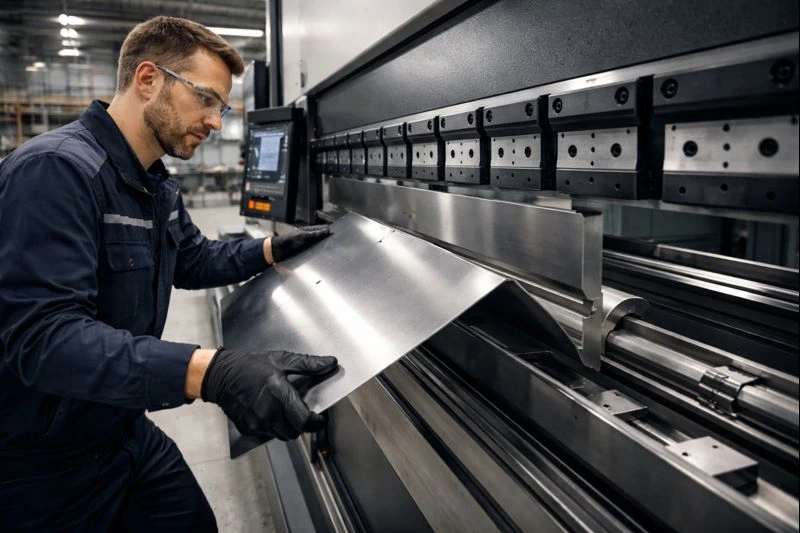
Brake bending is one of the most critical processes in sheet metal fabrication. It allows flat metal sheets to be shaped into precise angles and complex forms while maintaining material integrity.
Precision Brake Bending at Toledo Fab
Toledo Fab provides brake bending services using modern press brake machines operated by experienced professionals. This ensures every bend meets exact specifications and maintains uniformity across multiple parts.
Our brake bending process focuses on:
Accurate angle control
Consistent repeatability
Minimal material stress
Clean and uniform bends
By maintaining tight tolerances, ToledoFab Services support components that fit correctly during assembly and perform reliably in real world applications.
Applications of Brake Bending Services
Brake bending services are widely used across multiple industries. Common applications include:
Electrical and control panels
Industrial enclosures and cabinets
Structural brackets and frames
Automotive and machinery components
Each project is handled with careful attention to material thickness, bend radius, and final application requirements.
Laser Tube Cutting Services for Complex Fabrication Needs
Laser tube cutting has transformed the way tubular metal components are fabricated. Compared to traditional cutting methods, laser tube cutting offers higher precision, faster processing, and greater design flexibility.
Advanced Laser Tube Cutting Capabilities
At Toledo Fab, laser tube cutting services allow precise cutting of round, square, and rectangular tubes. Using focused laser technology, we produce clean cuts, accurate holes, and complex profiles with minimal waste.
Key benefits of laser tube cutting include:
Burr free and smooth edges
High dimensional accuracy
Reduced secondary processing
Faster turnaround times
ToledoFab Services ensure that each tube is cut exactly according to design specifications, supporting efficient downstream assembly.
Industries Served by Laser Tube Cutting
Laser tube cutting is widely used in industries where precision and structural reliability are essential, including:
Automotive and transportation
Construction and infrastructure
Furniture manufacturing
Industrial equipment fabrication
By combining speed and accuracy, Toledo Fab helps clients meet production goals without compromising quality.
Flat Laser Cutting Services for Sheet Metal Precision
Flat laser cutting is the preferred method for cutting sheet metal into precise shapes and designs. This process uses a high powered laser to achieve clean cuts without distortion, even on complex patterns.
High Accuracy Flat Laser Cutting at Toledo Fab
Toledo Fab provides flat laser cutting services that support both simple and intricate designs. Our equipment allows consistent cutting quality across different materials and thicknesses.
Advantages of flat laser cutting include:
Excellent edge quality
Minimal material waste
High production efficiency
Compatibility with various metals
By using flat laser cutting, ToledoFab Services deliver components that require little to no additional finishing.
Materials Supported in Flat Laser Cutting
Our flat laser cutting services support a wide range of metals, including:
Mild steel
Stainless steel
Aluminum
Other industrial alloys
This flexibility allows Toledo Fab to serve diverse industries with varying material requirements.
Metal Tapping Services for Secure and Reliable Fastening
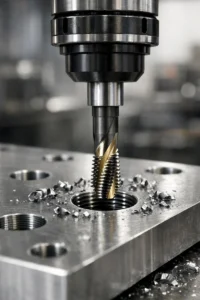
Metal tapping is essential for creating internal threads that allow secure fastening during assembly. Proper tapping ensures long term strength, reliability, and ease of maintenance.
Professional Metal Tapping Solutions
Toledo Fab provides precise metal tapping services using controlled techniques that ensure clean and accurate threads. Our process minimizes the risk of thread damage and ensures compatibility with fasteners.
Benefits of metal tapping services include:
Strong and reusable threads
Reliable fastening performance
Improved assembly efficiency
Reduced risk of loosening
Metal tapping is a critical step in ensuring fabricated components perform safely under load and vibration.
Applications of Metal Tapping
Metal tapping services are commonly used in:
Automotive assemblies
Industrial machinery
Structural components
Electrical and mechanical enclosures
ToledoFab Services ensure that every tapped hole meets exact size and depth requirements.
Integrated Fabrication Services at Toledo Fab
What sets Toledo Fab apart is the ability to combine multiple fabrication processes into a seamless workflow. By offering brake bending, laser tube cutting, flat laser cutting, and metal tapping under one roof, we reduce lead times and improve consistency.
Our integrated approach allows:
Better coordination between processes
Reduced handling and rework
Improved overall quality
Faster project completion
Clients benefit from a single fabrication partner capable of handling complex projects from start to finish.
Why Choose ToledoFab Services for Metal Fabrication
Selecting the right fabrication partner directly impacts product quality and project success. Toledo Fab focuses on delivering value through expertise, technology, and service reliability.
Experience and Technical Expertise
Our team brings hands on experience across a wide range of fabrication projects. This allows us to understand industry standards and deliver components that meet functional requirements.
Advanced Machinery and Technology
Toledo Fab invests in modern CNC and laser systems to maintain precision and efficiency. This ensures repeatable quality across all fabrication services.
Quality Focused Production
Quality checks are integrated at every stage of production. Each component is inspected to ensure it meets client specifications before delivery.
Customer Centric Service
We prioritize clear communication, accurate timelines, and responsive support. ToledoFab Services are designed to align with client production schedules and project goals.
Industries That Rely on Toledo Fab
Toledo Fab supports a wide range of industries that require dependable metal fabrication services, including:
Automotive manufacturing
Construction and infrastructure
Industrial equipment production
Furniture and architectural fabrication
Our ability to adapt to different industry requirements makes ToledoFab Services a trusted fabrication partner.
Commitment to Quality and Consistency
Quality is not an afterthought at Toledo Fab. It is built into every stage of our fabrication process. From material selection to final inspection, we maintain strict quality control to ensure reliability.
Our commitment includes:
Consistent dimensional accuracy
Clean finishes and precise cuts
Compliance with technical drawings
Reliable repeatability across orders
This focus on quality helps clients reduce assembly issues and improve overall product performance.
Partner with Toledo Fab for Reliable Fabrication Services
When precision, reliability, and efficiency matter, Toledo Fab delivers fabrication solutions that support long term success. Our comprehensive service offering allows clients to streamline production while maintaining high quality standards.
Whether you require brake bending for sheet metal components, laser tube cutting for complex structures, flat laser cutting for detailed designs, or metal tapping for secure fastening, ToledoFab Services provide dependable results.
Contact Toledo Fab today to discuss your fabrication requirements and discover how our expertise can support your next project.