MIG vs TIG welding is one of the most discussed topics in metal fabrication because both methods are powerful yet serve very different purposes. Learn more about the importance of welding in metal fabrication for successful projects. Choosing the right welding technique directly impacts weld strength, visual quality, production speed, and overall cost. Many fabricators struggle because the differences are not always obvious at first glance.
This guide explains MIG welding, TIG welding, and the real difference between MIG and TIG welding in a clear, practical, and human friendly way so you can make confident decisions for your projects.
MIG vs TIG Welding Why This Comparison Matters
There is no universal welding method that works best for every application. The reason MIG vs TIG welding is such a common comparison is because each process performs differently under different conditions.
The choice matters because welding affects long term durability, safety, and appearance. A poor decision can lead to weak joints, excessive rework, or unnecessary expenses. Understanding this comparison helps ensure better outcomes in both industrial and custom fabrication work.
Quick Answer MIG vs TIG Welding in Simple Terms
If speed, efficiency, and ease of learning are your priorities, MIG welding is often the better option. If your project requires precision, clean welds, and a refined finish, TIG welding, also known as tigger welding, is usually the right choice.
In simple terms, MIG welding focuses on productivity while TIG welding focuses on control and quality. The best method depends on what the project demands most.
Understanding Welding Basics Without Complexity
Welding works by using an electric arc to generate heat that melts metal so two pieces can fuse together. In many cases, a filler material is added to strengthen the joint, and shielding gas protects the molten weld from reacting with air.
The main difference between MIG versus TIG welding lies in how the filler material is introduced and how much control the welder has over heat input. These two factors influence penetration, distortion, and final weld appearance.
MIG Welding Explained Speed and Efficiency
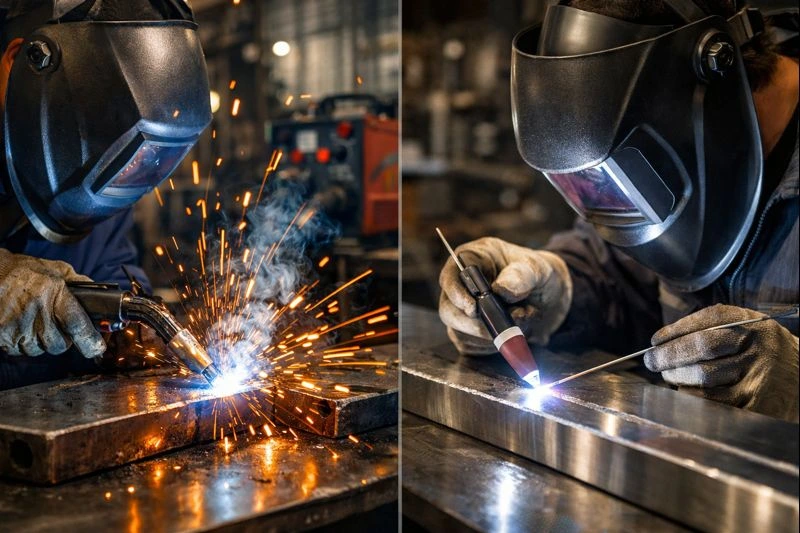
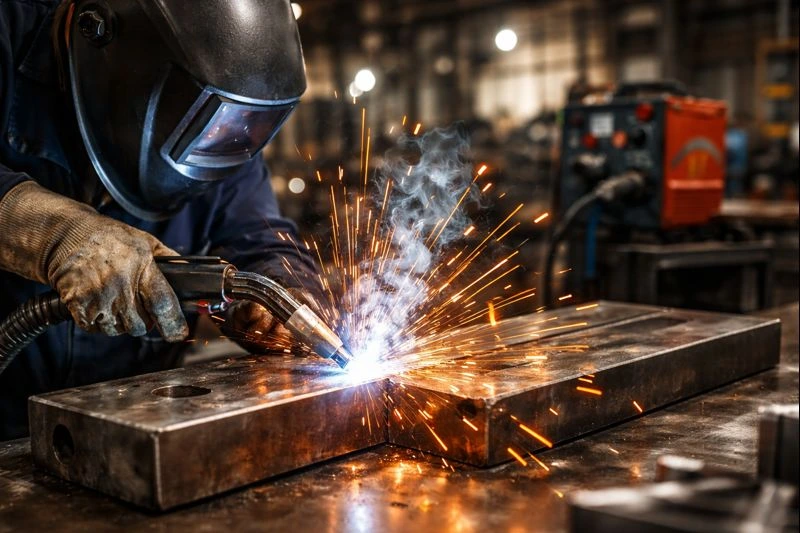
MIG welding, or Metal Inert Gas welding, is designed for fast and consistent results. It uses a continuously fed wire that acts as both the electrode and filler material. This automation makes MIG welding popular in production environments.
How MIG Welding Works
• The welding gun feeds wire automatically
• Shielding gas flows continuously around the arc
• The wire melts and fills the joint without interruption
• Long welds can be completed quickly
Advantages of MIG Welding
• Easy to learn for beginners
• High welding speed
• Strong penetration on thick metals
• Suitable for industrial and high volume work
Limitations of MIG Welding
• Less precise heat control
• More spatter compared to TIG welding
• Not ideal for very thin materials
• Performance can drop outdoors due to wind
TIG Welding: Precision and Control Explained
TIG welding, often called tigger welding, is known for its precision and clean results. It uses a non consumable tungsten electrode, and the filler material is added manually by the welder. This allows exceptional control over the weld pool.
TIG welding is commonly chosen for projects where accuracy, consistency, and appearance are critical.
How TIG Welding Works
• Tungsten electrode creates a stable arc
• Welder manually feeds filler rod
• Shielding gas protects the weld area
• Heat is carefully controlled throughout the process
Advantages of Tigger Welding
• Excellent control over heat and penetration
• Clean, spatter free welds
• Ideal for thin metals and delicate work
• Produces smooth and visually appealing joints
Challenges of TIG Welding
• Requires more skill and practice
• Slower welding speed
• Higher labor costs
• Less efficient for large scale production
MIG vs TIG Welding: Key Differences Between
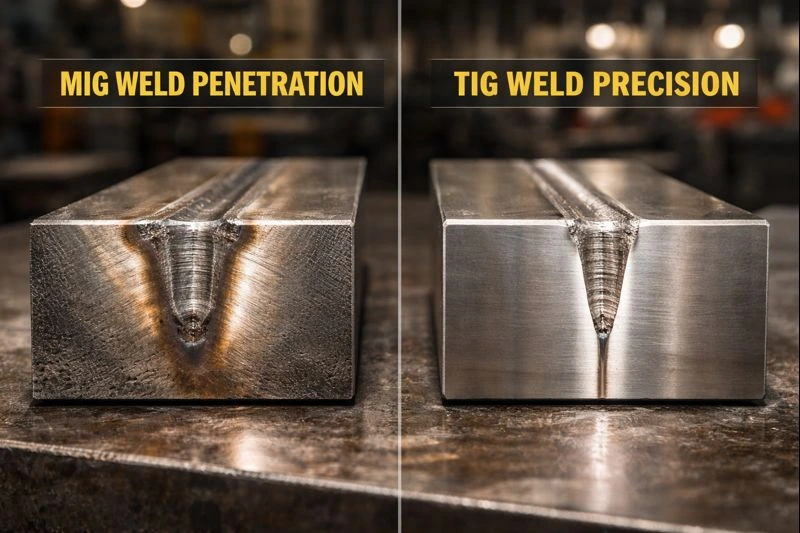
The most overlooked difference between MIG and TIG welding is heat management. Heat control determines how much distortion occurs and how consistent the weld penetration will be.
MIG welding delivers heat quickly and aggressively, which is beneficial for thick materials but can cause warping on thin metals. TIG welding allows gradual and precise heat adjustment, making it ideal for delicate applications. This difference plays a major role in weld quality and long term durability.
MIG vs TIG Welding by Metal Type
Different metals respond differently to welding heat and technique.
Mild Steel
• MIG welding is commonly used because of speed and penetration
• TIG welding is chosen when appearance matters
Stainless Steel
• TIG welding produces clean, corrosion resistant welds
• MIG welding works well for thicker structural parts
Aluminum
• TIG welding is ideal for thin aluminum due to heat control
• MIG welding performs well on thicker aluminum sections
Thin Sheet Metal
• TIG welding reduces the risk of burn through
• MIG welding requires careful adjustment
MIG Versus TIG Speed Cost and Productivity
MIG welding is known for its high speed and efficiency, especially in large scale and repetitive projects. The continuous wire feeding system allows welders to work faster with fewer interruptions, which significantly improves productivity and lowers overall labor costs.
TIG welding is a slower and more controlled process that relies heavily on operator skill. This increased level of precision raises labor time and cost, but it often results in cleaner welds that reduce the need for rework and material correction.
When comparing MIG versus TIG from a productivity standpoint, the decision comes down to project priorities. Jobs that demand fast turnaround and high output benefit from MIG welding, while projects that require accuracy, consistency, and superior finish are better suited for TIG welding.
Weld Strength vs Appearance: What Matters?
Weld strength depends primarily on proper technique, joint preparation, and consistent penetration rather than the welding process alone. When performed correctly, both MIG and TIG welding are capable of producing durable and reliable joints that meet structural requirements.
MIG welding is commonly used for applications where strength and load bearing performance are critical, making it a trusted choice for structural and industrial projects. TIG welding is often selected when the weld will remain visible and a smooth, refined appearance is essential.
Choosing between MIG and TIG welding requires balancing functional performance with visual expectations. Projects that prioritize structural integrity and efficiency often favor MIG welding, while projects that demand clean finishes and precise control benefit more from TIG welding.
Beginner vs Professional Welding Needs
MIG welding is often recommended for beginners because it is forgiving and easier to master. It allows new welders to achieve reliable results with less training.
TIG welding is more suitable for professionals who require precise control and consistency. Many experienced welders learn both methods to handle a wide range of fabrication tasks.
Real World Applications of MIG and TIG Welding
MIG welding is commonly applied in automotive manufacturing, construction projects, and heavy industrial fabrication where fast production, strong joints, and consistent results are required to meet tight timelines.
TIG welding is frequently used in aerospace components, custom metal fabrication, artistic metalwork, and food grade stainless steel applications where precision, cleanliness, and visual quality are critical.
In many real world fabrication environments, both MIG and TIG welding are used together to achieve the best results. MIG welding handles structural and high volume work, while TIG welding is reserved for detailed sections, thin materials, or areas where appearance and accuracy are especially important.
Hidden Costs When Choosing a Welding Method
The initial equipment cost is only part of the total expense. Long term costs often make a bigger difference.
• Consumable usage such as wire and shielding gas
• Equipment maintenance and repairs
• Labor and training requirements
• Rework caused by poor weld quality
Choosing the right welding method helps control these hidden costs.
Safety Differences Between MIG and TIG Welding
Both welding methods require proper safety precautions to protect operators and the workplace.
• MIG welding produces more spatter
• TIG welding generates intense arc brightness
• Protective clothing and gloves are essential
• Proper ventilation reduces health risks
Training and safety awareness are critical regardless of the method used.
Common Myths About MIG vs TIG Welding
One common myth is that TIG welding always produces stronger welds than MIG welding. In reality, weld strength depends more on proper technique, joint design, and penetration rather than the welding method itself.
Another misconception is that MIG welding creates low quality or weak joints. When performed by a skilled welder, MIG welding can deliver strong, consistent, and reliable welds that are well suited for many structural and industrial applications.
How Pros Choose Between MIG and TIG
Professionals select a welding method by carefully evaluating the material type, thickness, and overall complexity of the project. Factors such as production volume, available equipment, and required skill level also play an important role in the decision making process.
In many fabrication projects, MIG and TIG welding are used together to achieve the best results. MIG welding is often chosen for structural or high speed work, while TIG welding is applied to detailed areas where precision, finish, and quality expectations are higher.
FAQs About MIG vs TIG Welding
Is MIG welding better than TIG welding
MIG welding is better for speed, while TIG welding is better for precision.
What is the main difference between MIG and TIG welding
The main difference is filler metal delivery and heat control.
Is tigger welding the same as TIG welding
Yes, tigger welding is another name for TIG welding.
Which welding method is cheaper
MIG welding is usually more cost effective for large scale work.
Which welding method is best for aluminum
TIG welding is best for thin aluminum, while MIG welding works well for thicker aluminum.
Final Verdict MIG vs TIG Welding
There is no single winner in the MIG vs TIG welding comparison. MIG welding offers speed, efficiency, and ease of use, making it ideal for industrial and high volume projects. TIG welding delivers unmatched precision and clean finishes, making it perfect for detailed and high quality fabrication.
The right choice depends on your project requirements, materials, and quality expectations. Understanding the true difference between MIG and TIG welding allows you to achieve stronger, cleaner, and more cost effective results.