In modern manufacturing and construction, precision is paramount. From the structural components of a skyscraper to the intricate parts inside a high-tech machine, the accuracy of each piece is critical to the safety, function, and longevity of the final product. One of the most fundamental processes in metal fabrication is bending, and the primary tool used for this task is the press brake. While the concept of bending metal seems straightforward, achieving accurate, durable, and consistent bends requires a level of expertise and technology that goes far beyond a simple machine.
Choosing a professional metal fabrication service is a crucial decision for any project. An expert provider doesn’t just bend a piece of metal; they apply a deep understanding of material science, advanced tooling, and process control to create components that meet exact specifications every single time. This expertise is what separates a functional part from a flawless one, a temporary fix from a lasting solution.
This guide will explore why relying on expert metal brake services is essential for ensuring your projects are built with accuracy and durability. We will cover the complexities of the bending process, the advanced technologies used, the importance of material knowledge, and how skilled operators translate design into reality. Understanding these elements will help you appreciate the value that a specialized fabrication partner brings to the table, safeguarding your investment and the integrity of your work.
The Foundation of Metal Bending: What is a Press Brake?
Before we can appreciate the importance of expert services, it’s essential to understand the core technology involved. A press brake is a machine tool designed for bending sheet and plate metal. It works by clamping the material between a matching punch and die set. The machine applies immense force, pressing the punch into the die, which forces the metal to bend into a predetermined angle.
While the principle is simple, the execution is highly complex. Press brakes come in various types, including mechanical, hydraulic, pneumatic, and servo-electric, each with its own advantages and ideal applications. Modern press brakes are often CNC (Computer Numerical Control) operated, allowing for an incredible degree of precision and repeatability that would be impossible to achieve manually. These machines can be programmed to execute a sequence of bends, create complex geometries, and adjust for material variations automatically.
The process involves much more than just applying force. Factors like the material type, thickness, grain direction, and desired bend radius all influence the outcome. A successful bend requires careful calculation of variables like bend allowance and springback—the tendency of metal to partially return to its original shape after bending. This is where the skill of the operator and the sophistication of the metal brake technology become indispensable. Without expert knowledge, what seems like a simple bend can result in cracked material, inaccurate angles, or weakened structural integrity.
Precision Perfected: How Experts Achieve Unmatched Accuracy
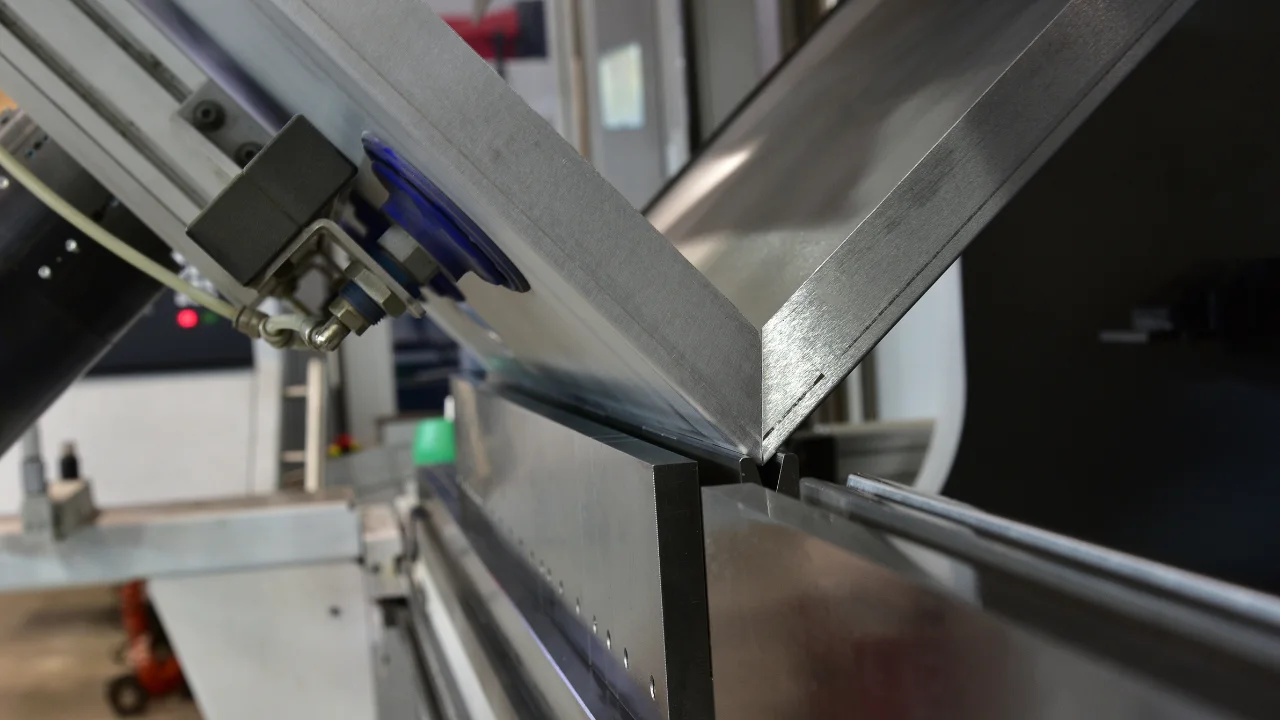
Accuracy in metal bending isn’t a single target; it’s a combination of hitting precise angles, maintaining consistent dimensions, and ensuring every part is identical to the last. Expert fabrication services achieve this through a combination of advanced technology, meticulous processes, and deep technical knowledge.
Advanced CNC Technology
Modern CNC press brakes are the cornerstone of precision bending. These machines translate digital CAD (Computer-Aided Design) files directly into machine instructions, eliminating the potential for human error in setup and measurement. Key features of advanced CNC systems include:
- Programmable Ram Speed and Position: The machine’s ram, which holds the punch, can be controlled with microscopic precision. This allows for “air bending,” a technique where the punch doesn’t fully bottom out in the die, giving operators fine control over the bend angle by adjusting the ram’s penetration depth.
- Automated Backgauges: These are adjustable stops at the back of the machine that position the metal sheet for each bend. Multi-axis backgauges can move up, down, forward, and backward, allowing for complex sequences of bends on a single piece without manual repositioning. This ensures every bend is located exactly where the design specifies.
- In-Process Angle Correction: Some of the most advanced press brakes feature laser or probe systems that measure the bend angle in real-time. If the system detects any deviation from the target angle, it automatically adjusts the ram pressure on the next stroke to correct it, compensating for material inconsistencies and ensuring perfect results.
The Science of Tooling
The punch and die set used for bending is just as critical as the machine itself. An expert service maintains a vast library of tooling to suit different materials, thicknesses, and bend profiles.
- Proper V-Die Selection: The width of the V-shaped opening in the bottom die directly impacts the inside radius of the bend and the amount of force required. An experienced technician knows how to select the optimal V-die to achieve the desired radius without damaging the material. Using the wrong die can lead to cracking on the outside of the bend or excessive deformation.
- Specialized Tooling: For unique shapes, such as hems, offsets, or radius bends, specialized tooling is required. An expert shop will either have these tools on hand or have the capability to design and fabricate custom tooling for a specific project. This versatility is something smaller, less-equipped shops cannot offer.
- Tooling Maintenance: Punches and dies wear down over time. Worn tooling can lead to inaccurate bends and marring of the material surface. Reputable services have strict maintenance and calibration schedules to ensure their tools are always in prime condition.
The Material Difference: Why Knowledge of Metallurgy is Crucial
Different metals and alloys behave in unique ways under pressure. An expert in metal fabrication possesses a deep understanding of metallurgy, which allows them to anticipate and control how a material will react during the bending process. This knowledge is fundamental to creating durable, reliable parts.
Understanding Springback
Springback is the bane of inexperienced press brake operators. It is the elastic recovery of the material after the bending pressure is released. The amount of springback varies significantly based on the material’s type, temper, and thickness. For example, high-strength steel will spring back more than mild steel, and aluminum alloys will behave differently from stainless steel.
An expert operator or programmer accounts for springback by over-bending the material by a precise amount. They use their experience, material data sheets, and often sophisticated software simulations to calculate the exact over-bend angle required to achieve the final desired angle. Without this calculation, bend angles will be consistently inaccurate, leading to parts that do not fit together correctly.
Preventing Material Failure
Applying thousands of pounds of pressure to a piece of metal can easily cause it to fail if not done correctly.
- Cracking: Bending metal stretches the material on the outside of the bend and compresses it on the inside. If the bend radius is too tight for the material’s thickness and ductility, the outer surface can crack. Expert technicians know the minimum bend radii for various materials and will advise on design adjustments if a specified radius is too aggressive.
- Grain Direction: Many sheet metals have a grain direction, a result of the rolling process during their manufacture. Bending parallel to the grain is more likely to cause cracking than bending across it. Whenever possible, an experienced operator will orient the part to bend across the grain to maximize strength and durability.
- Work Hardening: The process of bending cold-works the metal, making it harder and less ductile in the bend area. While this can increase the strength of the part, excessive bending or re-bending can make the material brittle and prone to failure. Experts manage the bending sequence to minimize work hardening in critical areas.
The Human Element: The Skill of the Operator
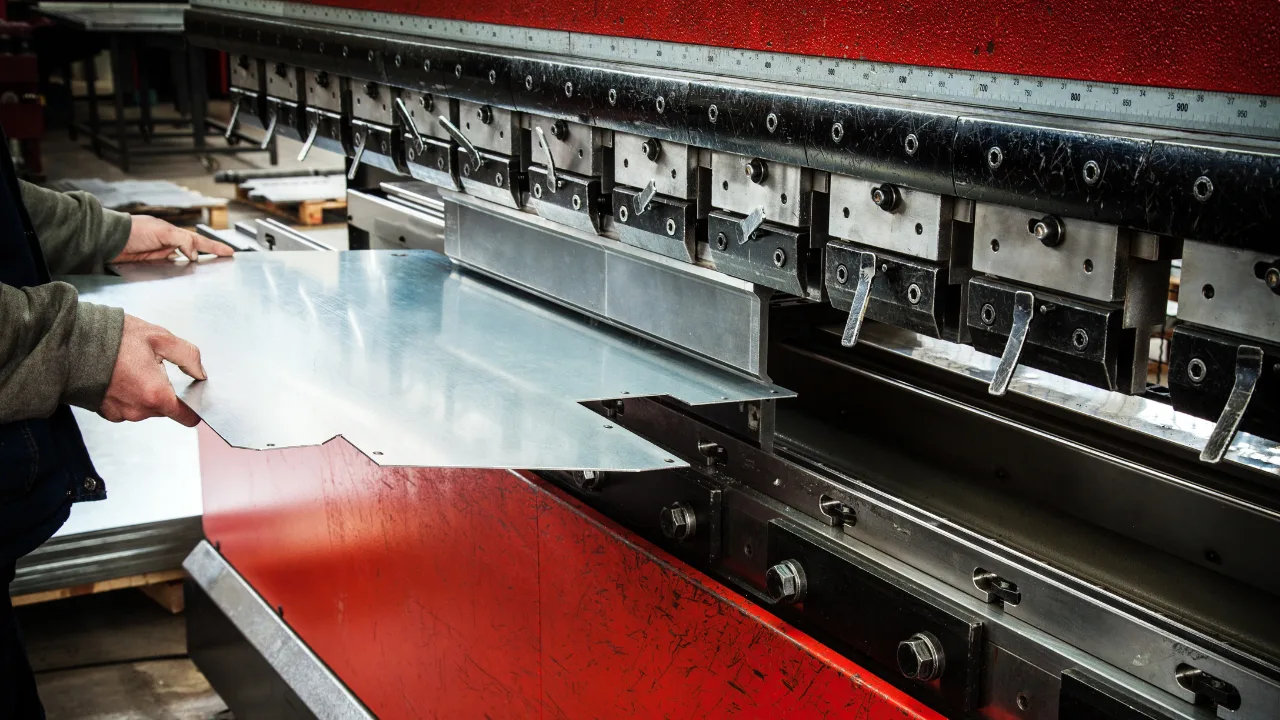
Even with the most advanced CNC metal brake in the world, the skill and experience of the operator are irreplaceable. A great operator is part machinist, part engineer, and part problem-solver. Their expertise is evident in several key areas:
Intelligent Sequencing
For parts with multiple bends, the order in which the bends are made is critical. A poor sequence can make it impossible to perform subsequent bends because the part collides with the machine or tooling. Experienced operators can visualize the entire process and plan an efficient sequence that avoids collisions and minimizes material handling. This “art” of sequencing saves time, reduces waste, and is a hallmark of a high-quality fabrication service.
Troubleshooting and Adaptation
No two batches of material are ever perfectly identical. There can be slight variations in thickness, hardness, or chemical composition. A skilled operator can identify these subtle differences and make real-time adjustments to the machine’s program to maintain consistency. They listen to the machine, inspect the first few parts off the line, and use their senses to ensure everything is running perfectly. This adaptive expertise is something that cannot be fully automated.
Quality Control
Expert operators are the first line of defense in quality control. They are trained to inspect parts for cosmetic defects like tool marks, as well as dimensional inaccuracies. By catching potential issues early in the process, they prevent the production of large quantities of scrap parts, saving time and money for the client.
Building for the Future: Why Durability Matters
When you choose an expert metal brake service, you are investing in more than just accuracy; you are investing in durability. A properly formed part is a strong part. By respecting the limits of the material, using the correct tooling, and controlling the bending process, experts ensure that the structural integrity of the metal is not compromised.
- Stress Distribution: An accurate, smooth bend radius distributes stress evenly across the part. An improper bend with a sharp, cracked corner creates a stress concentration point, which is a potential point of failure under load.
- Longevity: Parts that are bent correctly will withstand vibration, thermal cycling, and mechanical stress far better than poorly formed parts. This translates to a longer service life for the final product, whether it’s a vehicle chassis, an architectural element, or an industrial machine.
- Safety: In many applications, part failure is not an option. For structural components, safety railings, or vehicle parts, the durability imparted by expert fabrication is a critical safety feature.
Your Partner in Fabrication
Ultimately, choosing a professional metal brake service is about forging a partnership with a team of experts dedicated to your project’s success. They provide more than just a service; they offer design-for-manufacturability feedback, material selection advice, and a commitment to quality that protects your reputation and your bottom line.
They ensure that the parts you receive are not only accurate to the thousandth of an inch but are also robust, reliable, and ready for their intended application. The precision and durability they deliver are the invisible pillars that support the quality of your finished product.